Introduction: For small and medium-sized enterprises targeting the Greater China region or international markets, Hong Kong Station Cluster Servers are often given priority due to geographical and network advantages. This article focuses on the topic of “how small and medium-sized enterprises can purchase server services in Hong Kong to save money while ensuring security,” providing actionable guidelines for procurement and operation to help decision-makers strike a balance between cost and risk.
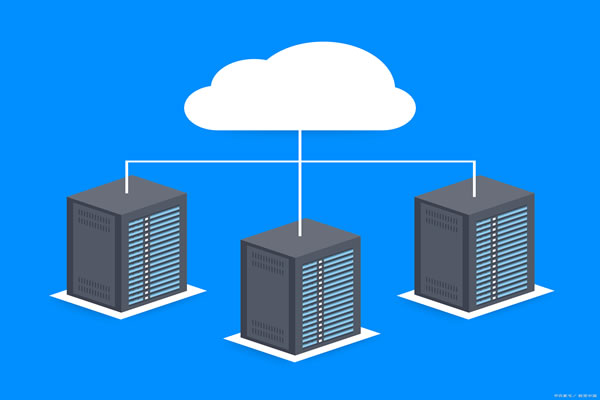
Before purchasing, clarify the volume of business, concurrent requests, availability requirements, and compliance constraints. Through traffic analysis, peak prediction, and growth estimation, determine appropriate configurations for CPU, memory, disk, and bandwidth, to avoid purchasing too many resources at once or entering long-term contracts that lead to cumulative costs and underutilization.
Different deployment patterns suit different scenarios. VPS and cloud servers are flexible and suitable for dynamic needs ; Dedicated servers are suitable for high performance and special network requirements. Select the type based on the scale of the station cluster and security isolation requirements, and combine features such as snapshots and images to reduce operational complexity.
There are various bandwidth and traffic billing models: Charging by bandwidth peak and charging by usage volume each have their advantages and disadvantages. Small and medium-sized enterprises should make their choices based on the characteristics of their business. At the same time, they can reduce bandwidth usage through front-end optimizations such as caching, CDN, and image compression, thereby lowering traffic costs.
The selection of a data center in Hong Kong should take into account the distribution of target users and the quality of the operator’s network. By reasonably deploying multiple nodes or using technologies such as intelligent scheduling and Anycast, access latency and routing stability can be optimized, ensuring fast access speeds and good connectivity for the site cluster in key markets.
Specify the data storage location, backup strategy, and privacy compliance requirements at the time of procurement. Firewalls, WAFs, DDoS protection, and intrusion detection are employed, along with established data encryption and logging policies, to meet regulatory requirements and minimize losses caused by security incidents.
The station cluster architecture should include regular backups, off-site disaster recovery, and rapid recovery plans. Utilize automated backups, snapshots, and distributed storage, along with regular recovery drills, to ensure rapid business restoration in the event of failures or attacks, thereby reducing downtime costs.
When choosing a service provider, pay attention to network connectivity, data center qualifications, audit compliance reports, and technical support response times. Clarify SLA terms, compensation mechanisms, and maintenance windows. Give priority to suppliers with mature operations and local support capabilities to reduce long-term risks.
Control costs through flexible contracts, pay-as-you-go pricing, and phased trials. When signing a contract, pay attention to peak bandwidth calculations, overage pricing rules, and the contract duration to avoid hidden costs. Prioritize using horizontally scalable architectures to enable scaling on demand, rather than making large one-time investments.
Small and medium-sized enterprises can outsource daily operations and security monitoring to professional teams to reduce recruitment and training costs. When choosing outsourcing, clarify the boundaries of responsibilities, emergency response procedures, and reporting mechanisms to ensure that the outsourced services meet business continuity and security standards.
Establish a monitoring and alerting system to continuously optimize application performance and resource utilization. By continuously adjusting strategies through log analysis, traffic distribution, and security incident review, maximum returns can be achieved from technical investments, thereby saving costs while enhancing security.
Summary: When small and medium-sized enterprises purchase services related to server clusters in Hong Kong, they should start with a needs assessment, and develop a comprehensive plan by considering factors such as server type, bandwidth strategy, data center selection, and security compliance. Through flexible contracts, third-party services, and continuous optimization, costs can be kept under control while ensuring security. It is recommended to start with a small-scale pilot to verify performance and the network, before gradually expanding.
- Latest articles
- A Must-read For Start-up Teams: How To Build A Computer Room In Hong Kong: Key Equipment And Supplier Selection
- Cost Analysis: Comparison Between On-demand Purchase And Long-term Rental Of Japanese Native IP Vps
- Developer Guide Korean Vps Port And Security Settings In Native IP Environment
- Cloud Singapore Server Selection Guide Meets Global Deployment Needs From Bandwidth To Availability Zone
- A Must-read Cloud Server For Newbies: Vietnam’s Billing Model And Selection List
- Full Process Guide For Purchasing And Performance Optimization Of VPS With Japanese Native IP
- An Explanation Of Vietnam’s Native Residential IP Pool Management And IP Rotation Strategies From The Perspective Of A Service Provider
- When Selecting Locations For Cloud Service Implementation, Consider Network Latency And Bandwidth Conditions In Computer Rooms In India And Germany.
- How To Buy A US VPS With Bitcoin While Protecting Anonymity And Compliance Risks
- Vps Cambodia Connection Domestic Access Speed Optimization And Node Selection Suggestions
- Popular tags
-

Operation And Maintenance Practice Sharing Vps Hong Kong Host Cn2 Daily Monitoring And Optimization List
this article is a sharing of operation and maintenance practices, focusing on the daily monitoring and optimization list of vps hong kong host cn2, covering monitoring items, alarm strategies, performance optimization and common troubleshooting suggestions. it is suitable for operation and maintenance and webmaster reference. -

The Relationship Between Hong Kong Cn2 Bandwidth And Bgp And Its Impact
discuss the relationship between hong kong cn2 bandwidth and bgp and its impact on network performance, and provide guidance for enterprise network optimization. -
Revealing The Features And Service Quality Of Hong Kong Jiubao Computer Room
this article deeply reveals the characteristics and service quality of hong kong jiubao computer room, and analyzes its advantages and user experience in the industry.